
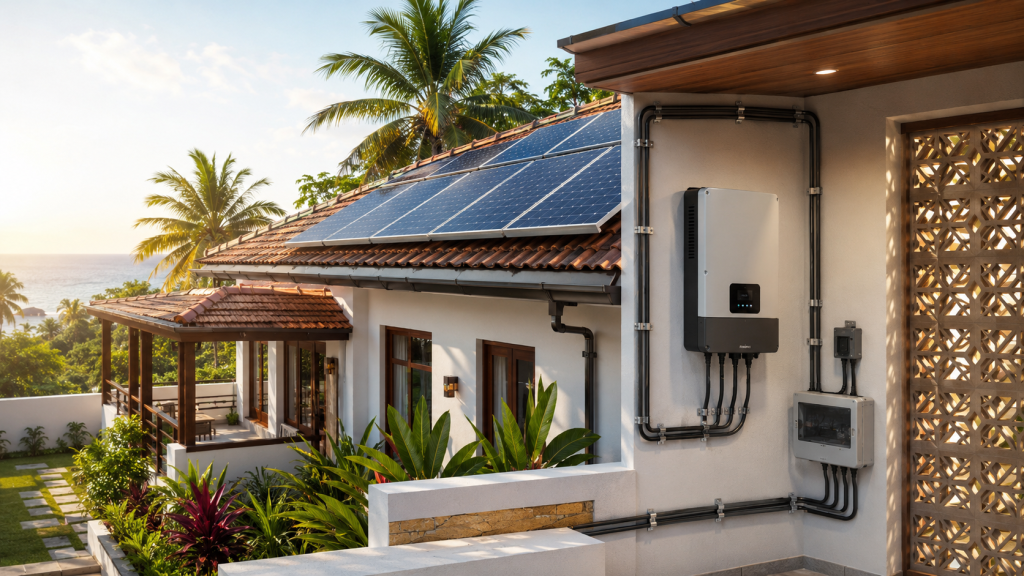
When homeowners in Goa plan rooftop solar, most attention goes to solar panels, system size, and cost. But two important details are often ignored until installation day: where the inverter will be placed and how the wiring will run.
These details matter more than many people realize. Poor inverter placement can make maintenance difficult. Messy wiring can affect safety, appearance, and long-term reliability. A well-planned solar installation should look clean, work safely, and allow easy access for future service.
Solar De Goa helps homeowners plan solar installation properly before work begins. This includes checking rooftop layout, inverter location, wiring route, safety requirements, roof access, and the overall system design.
If you are planning a solar installation in Goa, Solar De Goa can assess your rooftop, identify the right inverter location, plan safe wiring routes, and recommend a clean installation layout before the system is installed.
Direct Answer: Why Do Inverter Placement and Wiring Matter?
Inverter placement and wiring matter because they affect safety, performance, service access, and the final look of the installation. A solar inverter should be placed in a safe, accessible, protected, and well-ventilated area. Wiring should be planned neatly with proper routing, protection, and minimal unnecessary exposure.
These choices should be made during the site inspection, not after the panels arrive.
What Does a Solar Inverter Do?
The inverter is one of the most important parts of a solar system. Solar panels generate DC power, and the inverter converts it into usable AC power for your home.
Because the inverter is central to the system, its location should be chosen carefully. It should not be placed randomly just because a wall is available. The installer should consider ventilation, access, protection from direct rain, wiring distance, safety, and monitoring convenience.
Solar De Goa can help homeowners understand where the inverter should be placed based on their home layout and system type.
Where Should the Inverter Be Placed?
A good inverter location should be shaded, ventilated, accessible, and protected. It should not be exposed directly to heavy rain, harsh sunlight, or areas where water may collect. It should also be easy for technicians to reach during maintenance or inspection.
Common placement areas may include a utility wall, covered service area, garage, passage wall, or protected electrical area. The exact location depends on the home.
In Goa, humidity, rain, and coastal conditions should be considered. A location that looks convenient in summer may not be suitable during monsoon if it is exposed to water or moisture.
What Homeowners Should Avoid
Avoid placing the inverter in closed, poorly ventilated areas. Avoid areas where children can easily touch equipment. Avoid damp corners, exposed outdoor walls, or places where water leakage is common.
Also avoid placing the inverter so far away that wiring becomes unnecessarily long or complicated. Longer wiring routes may add complexity and may affect the neatness of installation.
The right approach is balance: the inverter should be safe, protected, practical, and serviceable.
Why Wiring Planning Should Happen Before Installation
Wiring should not be treated as an afterthought. A clean solar installation needs a planned route from panels to inverter and from inverter to the electrical system.
Good wiring planning helps avoid messy cable runs, unnecessary drilling, exposed wires, and future access issues. It also helps homeowners understand how the final installation will look.
Before installation, ask where the wires will run, whether conduits will be used, how roof entry points will be protected, and whether the wiring route will interfere with daily use of the roof. To understand the full step-by-step setup, read our guide on the solar installation process in Goa.
Inverter Placement and Wiring Checklist
| Item to Check | Why It Matters |
| Inverter ventilation | Helps avoid heat buildup and supports reliable operation. |
| Protection from rain | Important in Goa’s monsoon conditions. |
| Easy service access | Technicians should be able to inspect and service the inverter. |
| Safe height and location | Reduces accidental contact and inconvenience. |
| Wiring route | Keeps installation neat and practical. |
| Roof entry points | Helps avoid leakage or messy drilling. |
| Distance from panels | Affects wiring planning and installation layout. |
| Monitoring access | Makes it easier to check system performance. |
Real-Life Example
Imagine two homes in Goa installing similar rooftop solar systems.
Home A plans the inverter location during the site visit. The installer chooses a shaded, ventilated wall with easy access. Wiring is routed neatly through protected conduits, and roof entry points are planned properly.
Home B decides inverter placement on installation day. The inverter is placed in a damp corner because it is the nearest available wall. Wiring is routed visibly across the roof and wall. Future service access becomes inconvenient.
Both homes may have the same panel capacity, but the installation experience and long-term convenience can be very different.
What to Ask Your Installer Before Work Starts
Before installation begins, ask:
- Where will the inverter be installed?
- Is the location protected from rain and direct sunlight?
- Is there enough ventilation around the inverter?
- How will the wires run from the panels to the inverter?
- Will wiring be protected in conduits?
- Will drilling or roof entry points be sealed properly?
- Can the inverter be accessed easily for service?
- Will the installation look neat after completion?
A professional installer should be able to answer these clearly before starting work.
Does Inverter Placement Affect Cost?
Inverter placement can affect installation planning and, in some cases, cost. If wiring routes are long, difficult, or require extra protection, the installation scope may change. If special access, drilling, or protection is needed, it should be discussed in the quote.
This is why Solar De Goa recommends a proper site inspection before giving a final installation plan. A transparent quote should explain wiring, inverter placement, structure, safety components, and installation scope.
FAQ
Can the solar inverter be installed outside?
It may be possible if the location is protected and suitable, but direct rain, harsh sunlight, and moisture exposure should be avoided.
Should the inverter be near the solar panels?
It should be placed in a practical location that balances wiring distance, safety, ventilation, and access.
Does wiring planning affect solar performance?
Good wiring planning supports safety, neatness, and long-term reliability. Poor routing can create maintenance and access issues.
Can inverter placement be decided after installation starts?
It is better to decide during the site visit so wiring routes and installation layout can be planned properly.
Can Solar De Goa help plan inverter and wiring layout?
Yes. Solar De Goa can inspect your site and recommend a practical inverter location and wiring route before installation.
Final Verdict
Solar inverter placement and wiring planning are important parts of a good rooftop solar installation. Panels may be the most visible part of the system, but the inverter and wiring affect safety, service access, neatness, and long-term convenience.
For Goa homes, planning should consider monsoon exposure, roof access, ventilation, wiring distance, and maintenance needs. Solar De Goa helps homeowners plan these details before installation so the final setup is practical, clean, and reliable.
Schedule a Solar De Goa site visit to plan the right inverter location, wiring route, and rooftop solar installation layout for your home.