
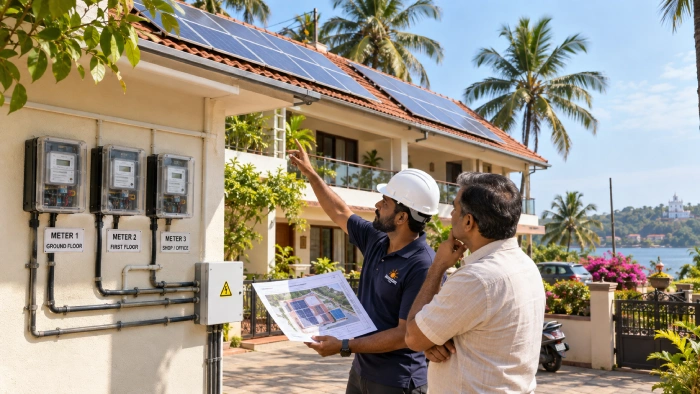
Many properties in Goa are not served by one simple electricity connection. A family building may have separate meters for different floors. A house may have an attached shop with another connection. Rental units may each have individual bills. A mixed-use property may have residential and commercial electricity connections under the same roof.
When such a property considers rooftop solar, the first question should not be, “How many panels can fit?”
The better question is: which electricity connection is the solar system being planned around?
Multiple meters can affect system sizing, quotation, roof allocation, application planning and how the financial benefit is understood. Solar De Goa can review the relevant electricity bills, inspect the rooftop and help property owners understand the practical options before a system is quoted.
If your Goa property has two or more electricity meters, share all relevant bills during the initial assessment rather than requesting a solar quote from only one bill.
Direct Answer: Can One Property with Multiple Meters Install Solar?
Yes, a property with multiple electricity connections can still be assessed for rooftop solar. However, the correct arrangement depends on the consumer connections, applicable metering framework, property use, roof availability and current electricity rules.
Do not assume that one rooftop solar system will automatically reduce every electricity bill in the building.
The installer should first identify which meter or connection the proposed project relates to and whether a different approved arrangement may be relevant.
Why Multiple Meters Change Solar Planning
Consider a three-storey house in Goa.
The ground floor may have one meter, the first floor another and a rented unit on the top floor a third. All three areas may share the same terrace.
Physically, there may be plenty of rooftop space for panels. Electrically and financially, however, three separate bills create additional questions:
- Which household is investing in the system?
- Which connection has the highest consumption?
- Who controls the roof?
- Are the meters in the same consumer’s name?
- Are some units rented?
- Is one connection commercial?
- How should the available roof area be allocated?
- Which approved metering arrangement applies?
These questions should be answered before system capacity and price are finalised.
Review Every Relevant Electricity Bill
The electricity bills help the installer understand the property much better than roof photographs alone.
For each relevant connection, review:
- Consumer number
- Name on the connection
- Consumer category
- Sanctioned load
- Monthly electricity consumption
- Seasonal usage changes
- Whether the unit is owner-occupied or rented
- Daytime versus night-time usage
A property may have one meter with high daytime consumption and another with very little usage. Quoting one large system without understanding this difference may result in poor planning.
Solar De Goa can compare the relevant bills before recommending how the project should be approached.
Multiple Meters Do Not Mean You Simply Add All the Bills
A common mistake is adding the electricity consumption from three meters and asking for one solar system based on the combined figure.
That may not reflect the approved electrical and metering arrangement.
Each connection has its own consumer details and electricity record. How solar generation can be linked or allocated depends on the applicable framework and current requirements.
This is why the quote should separate two questions:
- How much solar can the rooftop physically support?
- Which electricity connection or approved arrangement will use that solar generation?
The answers may not be identical.
Roof Allocation Becomes an Ownership Question
Multiple-meter properties often involve multiple occupants or owners.
For example, an ancestral home may be divided between siblings, while the terrace remains shared. A mixed-use building may contain a family residence and rented shops. An apartment-like building may have individual floors occupied independently.
Before solar installation, clarify:
- Who owns the roof?
- Who has permission to install panels?
- Is the available roof shared?
- Will one consumer use most of the roof?
- Is written consent needed from other owners?
- Must access be preserved for tanks, pipes and maintenance?
- Could another owner want solar later?
A technically good layout can still create future disputes if roof rights are unclear.
Residential and Commercial Connections Need Careful Review
Some Goa properties combine a residence with a shop, office, clinic, workshop or other business.
If the building has separate residential and commercial connections, do not assume they should be treated as one solar project merely because they share the same structure.
The electricity category, usage pattern and applicable process should be reviewed for each connection.
A commercial shop may consume heavily during daylight hours, while the residence uses more electricity in the evening. This can also affect the financial logic of where rooftop solar provides the strongest value.
What Can Affect the Solar Quote?
| Factor | Why It Matters |
| Number of electricity connections | Determines how many bills and consumer records need review |
| Consumption on each meter | Helps identify where solar may provide useful value |
| Consumer categories | Residential and commercial connections may differ |
| Sanctioned load | Relevant to system and application planning |
| Roof ownership | Determines who can approve rooftop use |
| Available roof area | Limits physical system capacity |
| Roof allocation | Important when several occupants share the terrace |
| Wiring and meter locations | Can influence installation layout |
| Applicable metering arrangement | Must be confirmed under current rules |
A transparent quotation should explain the proposed connection and installation scope rather than showing only a total panel capacity and price.
Real-Life Example
Imagine a Goa property with two floors and a street-facing shop.
The ground-floor family has one residential meter. The first-floor family has another. The shop has a separate commercial connection.
The terrace may physically support a useful solar array, but that does not automatically answer where the generated electricity should be accounted for.
Before quoting, the installer should understand the bills, roof ownership, meter locations, sanctioned loads and the intended beneficiary of the solar investment.
The final system may therefore depend as much on connection planning as on available roof space.
Questions to Ask Before Requesting a Quote
Ask Solar De Goa or your installer:
- Which electricity meter will the proposed system be associated with?
- Have all relevant bills been reviewed?
- Which connection has the highest useful daytime consumption?
- Does the property require a special metering arrangement?
- Are all consumer names and property details clear?
- Is the terrace jointly owned?
- How much roof space should be allocated to the project?
- Are residential and commercial connections being treated separately?
- What system capacity is practical?
- What exactly is included in the quotation?
These questions can prevent misunderstanding before money is committed.
FAQ
Can one solar system reduce two electricity bills?
Do not assume so. The applicable connection and metering arrangement must be checked under current rules.
Should I give the installer every electricity bill for the property?
Yes, if those connections are relevant to the solar decision. This helps the installer understand consumption and connection structure.
Can a house and shop under the same roof share solar?
Possibly under an appropriate approved arrangement, but residential and commercial connections should be reviewed individually before deciding.
Does having more meters automatically increase solar cost?
Not necessarily. Cost depends on system design, roof conditions, wiring, metering requirements and installation scope.
Can Solar De Goa assess a multi-meter property before quoting?
Yes. Solar De Goa can review the relevant bills, roof space, meter arrangement and property conditions before preparing a site-based proposal.
Final Verdict
Multiple electricity meters do not prevent a Goa property from exploring rooftop solar, but they make early planning more important.
Before selecting system size, identify the relevant consumer connections, compare electricity usage, clarify roof rights, check meter and sanctioned-load details, and confirm which approved arrangement applies.
The right solar quote should explain both the physical rooftop design and the electrical connection being planned.
Ask Solar De Goa to review all relevant electricity bills and rooftop conditions before finalising solar for a property with multiple meters.