
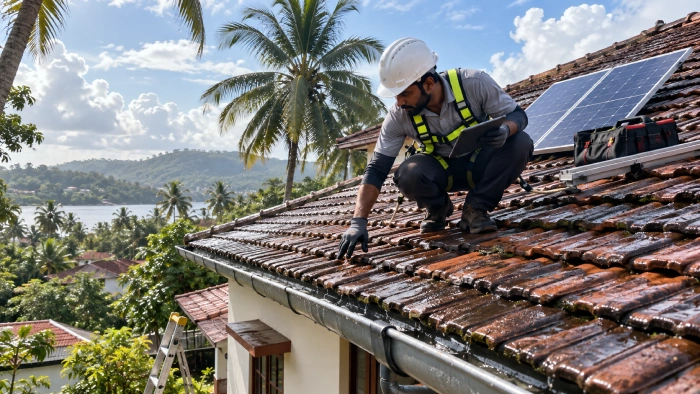
After months of heavy rain, a roof may tell you much more about its condition than it did during the dry season. Small leaks may become visible, tiles may shift, metal sheets may begin showing corrosion, drainage problems may appear, and new vegetation or tree growth may create additional shade.
If you are planning rooftop solar in Goa, this makes the post-monsoon period a useful time to inspect the roof before panels and mounting structures are installed.
Solar panels can remain on a roof for many years, so it is better to identify repair, waterproofing, drainage, or access issues before the solar system is mounted. Solar De Goa can inspect the usable roof area, existing obstacles, access conditions, and installation requirements before the final panel layout is prepared.
If you are considering rooftop solar after the monsoon, schedule a Solar De Goa roof assessment before finalising the system size or installation quote.
Direct Answer: Should You Inspect the Roof After the Monsoon Before Installing Solar?
Yes. A roof inspection before solar installation can help identify leaks, damaged roofing, poor drainage, waterproofing problems, corrosion, unstable tiles, new shade, and areas that may need repair.
These issues do not always mean the roof is unsuitable for solar. They simply need to be understood before panels are installed.
It is usually easier to repair or waterproof an exposed roof than to carry out major roof work after a solar array has already been mounted.
Look for Leaks Before Panels Cover the Roof
One of the most useful things the monsoon can reveal is where water enters the building.
Homeowners should pay attention to:
- Damp patches on ceilings
- Water marks on walls
- Dripping during heavy rain
- Dampness around roof joints
- Moisture around plumbing penetrations
- Cracks in roof surfaces
- Leakage near old fasteners or sheets
A leak should not automatically be blamed on the future solar installation. If the roof already leaks, the problem should be identified before mounting work begins.
This creates a clear baseline for both the homeowner and installer.
Check Waterproofing Condition
Flat RCC roofs in Goa may have waterproofing layers, coatings, screeds, or treated surfaces designed to prevent water penetration.
After a heavy monsoon, inspect whether there are:
- Cracks
- Peeling coatings
- Bubbling surfaces
- Loose treatment layers
- Persistent damp areas
- Water collecting in low spots
If major waterproofing work is already due, it may make sense to complete it before solar installation.
Solar De Goa can coordinate the proposed panel layout with roof access and mounting areas so future waterproofing and maintenance are considered during planning.
Tiled Roofs Need Their Own Inspection
Tiled roofs can also support solar in suitable situations, but the roof condition should be checked carefully.
Look for:
- Broken tiles
- Missing tiles
- Loose tiles
- Sagging sections
- Damaged supporting members
- Water entry below tiles
- Areas where previous repairs have failed
Installing solar over an already damaged tiled roof may create unnecessary future work.
If tiles need replacement or structural repairs, completing them first can reduce the chance that panels later need to be temporarily removed.
Different roof types can require different mounting, waterproofing and installation approaches. If you are comparing roof conditions before installing solar, read our guide on RCC roof vs tiled roof solar installation in Goa to understand how the roof type can influence installation planning and cost.
Metal-Sheet Roofs May Show Corrosion or Loose Fasteners
The monsoon can also reveal problems on metal roofs.
Check for:
- Rust
- Corroded edges
- Loose fasteners
- Damaged washers
- Open joints
- Bent sheets
- Water entry around fixing points
- Weak or deteriorated supporting members
Coastal exposure can make corrosion an especially important consideration for some Goa properties.
A metal roof does not need to be perfect or brand new to install solar, but the installer should understand its condition before choosing the mounting approach.
Drainage and Water Pooling Matter
A roof should be able to drain rainwater effectively.
After the monsoon, look for signs that water has been collecting in certain areas. These may include staining, algae growth, dirt lines, damp patches, or visible low points.
Solar mounting structures and panel layouts should not unnecessarily block roof drainage routes.
Important areas to preserve include:
- Rainwater outlets
- Roof gutters
- Drainage channels
- Downpipes
- Overflow areas
- Access for cleaning blocked drains
A solar layout should work with the roof’s drainage system rather than making future cleaning difficult.
Shade May Have Changed During the Monsoon
Tree and vegetation growth can change the amount of shade reaching a roof.
A rooftop that appeared open several months earlier may now be affected by:
- Coconut leaves
- Large tree branches
- New vegetation
- Nearby construction
- New rooftop equipment
Shade can change through the day, so the roof should be reassessed rather than relying only on an old photograph.
Solar De Goa can inspect the current usable roof area and identify whether shading affects the proposed panel layout.
Check Water Tanks, Pipes, and Roof Access
The monsoon can also expose access problems around water tanks and pipes.
Look for:
- Leaking tank connections
- Damaged overflow pipes
- Loose plumbing
- Slippery or damaged walkways
- Areas where water remains trapped
- Roof sections that are difficult to access safely
Solar installation should preserve practical routes to water tanks, pipes, drains, and other rooftop equipment.
Panels should not be placed in a way that makes normal building maintenance unnecessarily difficult.
What Should Be Checked Before the Solar Quote?
| Roof Area | What to Review |
| Waterproofing | Cracks, peeling, dampness and failed treatment |
| RCC roof | Structural condition and drainage |
| Tiled roof | Broken or loose tiles and supporting structure |
| Metal roof | Corrosion, fasteners and leaks |
| Drainage | Water pooling and blocked outlets |
| Shade | New vegetation or construction |
| Water tanks | Access, leaks and shadow |
| Roof access | Safe movement for installation and maintenance |
| Future repairs | Whether major roof work is already planned |
These conditions can affect the installation scope and sometimes the final quotation.
Should Repairs Be Done Before Solar?
If the roof has significant leaks, damaged tiles, corroded sheets, failed waterproofing, or structural concerns, repairing those issues before installing solar may be the better approach.
Minor problems may simply need normal maintenance.
The key is not to assume either way.
First inspect the roof. Then decide which work should happen before the solar system is mounted.
Common Mistakes to Avoid
Do not install solar over a roof that already has unresolved leakage without discussing it first.
Do not cover drainage routes or make water tanks inaccessible.
Do not rely on roof photos taken before the monsoon if vegetation, structures, or roof conditions have changed.
Do not postpone major waterproofing if it is already clearly required.
And do not assume that every damp patch means the roof needs complete replacement. The actual cause should be professionally assessed.
FAQ
Should roof leaks be repaired before solar installation?
Significant leaks should be identified and addressed before panels are installed so future roof work is easier.
Can solar be installed on an older tiled roof?
Possibly, but tile condition, supporting structure, access, and fixing requirements should be assessed first.
Does a metal roof need to be replaced if it has some rust?
Not automatically. The extent of corrosion and the condition of the roof and supporting structure should be evaluated.
Can tree growth after the monsoon affect solar layout?
Yes. New vegetation can create additional shade, so current roof conditions should be checked before finalising the panel layout.
Can Solar De Goa inspect the roof before quoting?
Yes. Solar De Goa can assess roof condition, usable space, shade, access, and installation requirements before preparing a site-based solar proposal.
Final Verdict
The post-monsoon period is a useful time to understand the true condition of a roof before installing solar in Goa.
Leaks, waterproofing problems, damaged tiles, corroded sheets, blocked drainage, new shade, and difficult access are easier to address before the mounting structure and panels are installed.
The goal is not to find reasons to delay solar. It is to make sure the roof is ready for the system you plan to install.
The post-monsoon period is a useful time to understand the true condition of a roof before installing solar in Goa. Leaks, waterproofing problems, damaged tiles, corroded sheets, blocked drainage, new shade and difficult access are easier to address before the mounting structure and panels are installed.
Schedule a post-monsoon solar roof inspection in Goa with Solar De Goa and plan your rooftop solar installation around the actual condition, usable space and installation requirements of your property.