
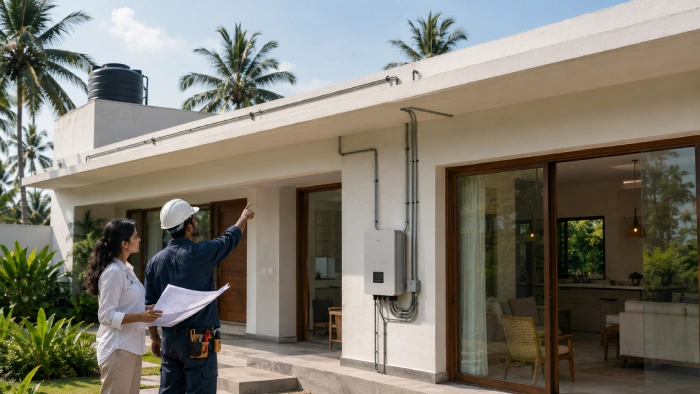
If you are building a new home in Goa, solar should not be treated as an afterthought. Many homeowners think about rooftop solar only after the house is complete. By then, the roof layout, water tank position, wiring routes, parapet height, and utility areas may already be fixed. Solar can still be installed later, but planning it earlier can make the process cleaner and more practical.
For a new home, solar planning should start before the roof is finished. This helps you reserve usable roof space, avoid shade problems, plan inverter placement, and keep wiring routes neat. Solar De Goa helps homeowners understand these details before construction is complete, so the final solar installation fits the home instead of being forced into whatever space is left.
If you are building a new home in Goa, Solar De Goa can help you assess your rooftop layout, understand system requirements, and plan the right solar setup before the roof is finalized.
Direct Answer: When Should You Plan Solar for a New Home?
The best time to plan solar is before the roof layout, electrical conduits, water tank placement, and utility areas are finalized. This does not mean the solar system must be installed immediately. It means your home should be made solar-ready during construction.
A solar-ready home can save time, reduce messy wiring, protect roof usability, and make future installation easier. To understand the complete setup journey, read our guide on the solar installation process in Goa and learn what happens from site inspection to final commissioning.
Why Solar Planning Should Start Early
Solar panels need clear roof space. If the roof is already filled with tanks, pipes, AC outdoor units, dish antennas, clothesline areas, or shaded sections, the final solar layout may become difficult.
During construction, you have more control. You can decide where the water tank should go, where access should be kept open, where conduits can be planned, and where the inverter can be placed. These small decisions can make solar installation smoother later.
Solar De Goa helps homeowners look at solar from a practical installation point of view, not just from a panel-price point of view.
Decide Roof Space Before It Gets Crowded
A common mistake in new homes is using the roof without thinking about solar. Water tanks, staircase rooms, parapet walls, skylights, and service areas may take up the best sunlight zones.
Before the roof is finished, identify which part of the roof gets the most open sunlight. Try to keep that area clear for future panels. Also think about walking space for cleaning and maintenance. Solar panels should not block all roof access.
In Goa, many homes also face shade from coconut trees, nearby houses, and sloping roof structures. If shade is expected, the panel layout should be planned carefully.
Plan Water Tank and Utility Placement
Water tanks are important, but poor placement can reduce solar space or cast shade on panels. If a tank is placed in the middle of the best roof area, it may reduce usable solar capacity.
During construction, discuss tank location, pipe routes, and maintenance access. Keep solar space and plumbing needs separate where possible. This helps avoid future changes or compromises.
A site discussion with Solar De Goa during the construction stage can help homeowners understand which areas should remain open for solar.
Plan Conduits and Wiring Routes
Wiring is easier when planned early. If solar conduits are considered during construction, the final installation can look cleaner and more professional. If wiring is planned after the house is complete, installers may need external conduits, extra drilling, or visible cable routes.
Ask your electrician and solar installer where solar wiring may run from the roof to the inverter and electrical panel. Even if you install solar later, keeping a planned route can reduce future work.
This is especially useful for premium homes, villas, and independent houses where appearance matters.
Decide Inverter Location Early
The solar inverter needs a safe, accessible, and ventilated location. It should not be placed in a damp corner or an area exposed to direct rain. It should also be reachable for service.
In a new home, you can plan a proper utility wall or service area for the inverter. This is better than trying to find a location after the house is complete.
The inverter location should be coordinated with the electrical panel, wiring route, and solar layout. Solar De Goa can guide homeowners on practical placement during the site planning stage.
Think About Future Electricity Use
A new home may start with basic electricity needs, but usage often increases later. Homeowners may add more ACs, a home office, EV charging, outdoor lighting, a water pump, or extra appliances.
Solar planning should consider future needs. This does not mean overspending immediately. It means designing the roof and electrical route so the system can be sized properly or expanded later if required.
Before finalizing the solar-ready layout, discuss your expected lifestyle, appliances, and future plans.
What Should Builders and Homeowners Coordinate?
Solar planning works best when the homeowner, builder, electrician, and solar installer coordinate early.
| Area to Plan | Why It Matters |
| Roof space | Ensures panels have clear sunlight and enough area |
| Water tank location | Avoids shade and space blockage |
| Wiring route | Helps keep installation neat and practical |
| Inverter location | Supports ventilation, safety, and service access |
| Roof access | Makes cleaning and maintenance easier |
| Future load | Helps plan for ACs, pumps, EV charging, or home office use |
Common Mistakes to Avoid
Do not wait until the entire home is finished before asking about solar. Do not place tanks or roof structures without considering sunlight. Do not assume any empty roof area will work. Do not ignore the wiring route and inverter placement.
Also, avoid finalizing solar system size without checking actual electricity needs. A new home may not have a full usage pattern yet, so planning should be flexible and practical.
FAQ
Should I install solar before moving into a new home?
You can, but it is not always necessary. At minimum, make the home solar-ready before the roof and wiring are finalized.
Can solar be planned before knowing my exact electricity bill?
Yes. You can plan roof space, wiring route, and inverter location first. Final system sizing can be done closer to installation.
Should I keep a separate space for the inverter?
Yes. A safe, ventilated, accessible area makes future service and system monitoring easier.
Can solar be added later if I plan properly now?
Yes. Proper roof and wiring planning can make later installation cleaner and easier.
Can Solar De Goa help during construction?
Yes. Solar De Goa can assess roof layout, wiring needs, inverter placement, and solar readiness before installation.
Final Verdict
Planning solar for a new home in Goa before the roof is finished can save time, reduce messy installation work, and improve long-term system planning. The key decisions are roof space, shade, water tank placement, wiring route, inverter location, and future electricity usage.
Solar De Goa helps homeowners plan solar-ready homes with practical site guidance and customized solar installation recommendations.
Schedule a site visit with Solar De Goa before your roof layout is finalized and plan a cleaner, smarter solar setup for your new home.