
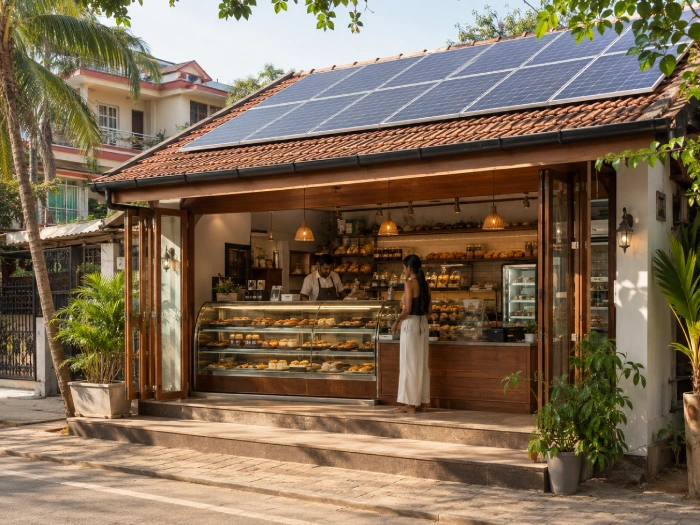
Bakeries and sweet shops in Goa can use electricity across several parts of the business. Display lighting, refrigerators, freezers, air conditioners, exhaust systems, mixers, billing counters, water pumps, preparation equipment, and electrically operated ovens may all contribute to the monthly power bill.
The electricity pattern can also change throughout the day. Production may begin early, display counters may operate during business hours, and refrigeration may continue even after the shop closes. Because of this, solar should not be planned around one appliance alone.
Rooftop solar may help reduce daytime dependence on grid electricity when the system is designed around actual consumption, operating hours, available roof space, and equipment use.
Solar De Goa helps bakeries, sweet shops, and other commercial properties evaluate solar through electricity bill review, rooftop inspection, daytime load assessment, and customised system planning.
If you operate a bakery or sweet shop in Goa, ask Solar De Goa to review your electricity usage and determine whether commercial rooftop solar is practical for your business.
Direct Answer: Is Solar Useful for Bakeries and Sweet Shops?
Solar can be useful for bakeries and sweet shops that have regular daytime electricity use and suitable rooftop space. During daylight hours, solar generation may support the property’s combined electrical demand from refrigeration, display lighting, AC, fans, billing systems, preparation equipment, and electrically operated appliances.
However, the final savings depend on actual consumption, operating schedule, system size, roof conditions, equipment load, and installation quality. Solar should therefore be evaluated through electricity bills and a site inspection rather than a generic package. If you are evaluating rooftop solar for your business, understanding the broader requirements of a commercial installation can help you make a better decision. Read our guide to commercial solar installation in Goa to understand system sizing, roof suitability, daytime consumption, installation requirements, and long-term savings.
Why These Businesses Have Mixed Power Loads
A bakery or sweet shop rarely has one simple electricity load. Different areas of the business may use power at different times.
Common loads can include:
- Refrigerators and deep freezers
- Refrigerated display counters
- Indoor and outdoor lighting
- Air conditioners and fans
- Mixers and preparation equipment
- Exhaust and ventilation systems
- Billing counters and computers
- Water pumps
- Electrically operated ovens or heating equipment
- Signage and decorative lighting
Not every business uses all these systems. Some bakeries use gas ovens, while others use electric or mixed equipment. Some sweet shops prepare products at a separate production unit and use the retail shop mainly for refrigeration, display, lighting, and sales.
This is why the installer should understand how the individual business operates before suggesting a solar capacity.
Electric Ovens Need Careful Load Planning
Where electric ovens are used, they may create a substantial load while operating. However, oven use may be concentrated during specific preparation periods rather than spread evenly across the day.
A solar recommendation should therefore consider:
- Oven type and electrical rating
- Number of ovens
- Production schedule
- Whether ovens operate during daylight hours
- Other equipment running at the same time
- Historical electricity consumption
- Future production plans
Solar should not be sized only to match the oven rating. The installer should review the complete property load and how multiple appliances operate together.
Solar De Goa can assess these patterns before preparing a commercial solar proposal.
Refrigeration May Run for Longer Hours
Refrigeration is often one of the most consistent loads in a bakery or sweet shop. Cakes, dairy products, chocolates, beverages, frozen stock, ingredients, and finished sweets may require cooling or temperature-controlled display.
Refrigerators and freezers may continue running after sunset, when rooftop panels are no longer generating electricity. A standard grid-connected solar system may reduce daytime grid usage, but the business may still rely on the grid at night.
Business owners should therefore separate two questions:
- How can solar reduce daytime electricity consumption?
- Does the business need backup for refrigeration during power interruptions?
These are related but different planning decisions.
Display Lighting and AC Add to Daytime Demand
Presentation is important for bakeries and sweet shops. Bright display counters, decorative lighting, signage, and comfortable air conditioning may run throughout business hours.
In Goa’s warm and humid conditions, cooling can form a noticeable part of commercial electricity usage. When AC, lights, refrigerators, billing systems, and preparation equipment run during the day, the combined demand may create a useful match with solar-generation hours.
A commercial assessment should consider all these loads together instead of focusing only on production equipment.
Production Unit vs Retail Shop
Some businesses prepare products and sell them from the same building. Others have a separate kitchen or production unit and one or more retail outlets.
The solar opportunity can differ in each case.
A production unit may have larger preparation equipment, ovens, mixers, ventilation, refrigeration, and daytime labour. A retail outlet may rely more on display cooling, lighting, AC, signage, and billing systems.
Solar De Goa can assess each location separately. The property with the highest bill is not automatically the best location; roof space, daytime consumption, ownership, access, and installation practicality also matter.
Roof Ownership and Permission
Many bakeries and sweet shops operate from rented commercial properties. Before planning rooftop solar, owners should confirm:
- Who owns or controls the roof?
- Is written permission required?
- Does the business have a separate electricity meter?
- Is the roof shared with other tenants?
- How long will the business remain at the location?
- Where can the inverter be placed?
- Is there a clear wiring route?
- Can the roof be accessed for future service?
A long-term solar investment should not be approved until permission and lease conditions are clear.
Factors That Affect Solar Savings
| Factor | Why It Matters |
| Electricity bills | Show actual monthly consumption |
| Production hours | Indicate when ovens and equipment operate |
| Refrigeration load | May continue throughout the day and night |
| AC and lighting | Add to daytime business consumption |
| Roof space and shade | Affect possible system capacity |
| Meter and property ownership | Influence installation practicality |
| Seasonal demand | Production and cooling needs may vary |
| Future expansion | Additional equipment can change electricity needs |
Exact savings should be estimated from the individual business rather than promised as a fixed figure.
Questions to Ask Before Installing Solar
Before approving a commercial solar quote, ask:
- Has the installer reviewed at least several electricity bills?
- Are ovens, refrigeration, AC, and lighting included in the assessment?
- How much of the business’s usage occurs during daylight?
- Is the rooftop suitable for the proposed system?
- Is the property owned or rented?
- What equipment and installation work are included?
- Is future business expansion being considered?
- What service and monitoring support will be available?
Clear answers help the business compare proposals more responsibly.
Common Mistakes to Avoid
Do not choose system size only from the number of ovens or refrigerators. Do not assume rooftop solar will independently run every appliance or remove the entire bill.
Avoid selecting a proposal only because it has the lowest price. The quotation should clearly cover panels, inverter, structure, wiring, safety components, installation work, and service support.
Also, do not ignore night-time refrigeration, rented-property permission, or planned equipment expansion.
FAQ
Is rooftop solar suitable for a bakery in Goa?
It may be suitable when the bakery has meaningful daytime electricity use, sufficient roof space, and a practical installation location.
Can solar support an electric oven?
Solar generation contributes to the property’s combined daytime electricity demand. The recommendation must consider oven load, operating schedule, and other appliances.
Can solar reduce refrigeration costs for a sweet shop?
It may reduce grid usage during daylight hours. Refrigeration operating after sunset will generally continue relying on the grid unless a separate backup arrangement is planned.
Can a rented bakery install rooftop solar?
Possibly, but written roof permission, lease duration, meter details, system ownership, and future relocation should be clarified first.
Can Solar De Goa assess a bakery or sweet shop?
Yes. Solar De Goa can review bills, equipment usage, roof conditions, operating hours, and installation requirements before recommending a commercial solar system.
Final Verdict
Bakeries and sweet shops in Goa may benefit from rooftop solar when they have regular daytime electricity demand from refrigeration, display lighting, AC, preparation equipment, and electrically operated appliances.
The right system cannot be selected from one machine or one month’s bill. Production schedules, refrigeration hours, roof space, property permission, night-time usage, and future expansion should all be reviewed.
Solar De Goa helps commercial businesses evaluate these factors through electricity bill analysis, rooftop inspection, and customised solar planning.
Request a commercial solar assessment in Goa from Solar De Goa and understand how rooftop solar could support the ovens, refrigeration, cooling, lighting, and other operating needs of your bakery or sweet shop.