
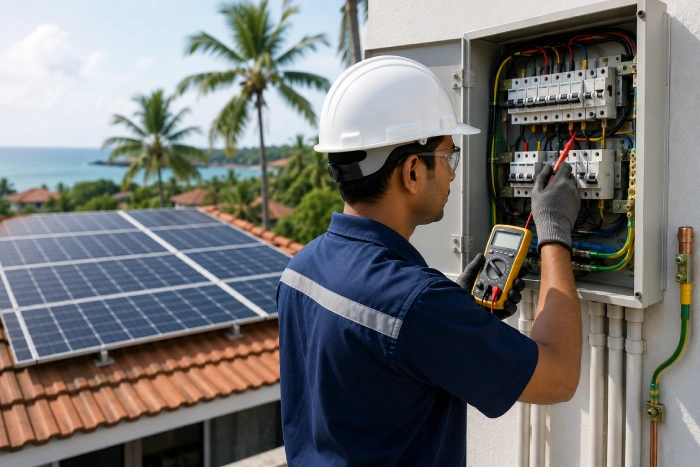
Before installing rooftop solar, most homeowners and business owners in Goa focus on panels, inverter, roof space, and cost. But there is another important step that should not be ignored: checking the existing electrical setup. Your electrical panel, earthing, wiring condition, and safety arrangements can affect how clean, safe, and practical the solar installation will be.
Solar is not just a roof project. It connects with your building’s electrical system. That is why electrical readiness should be checked before installation begins, not after the panels arrive.
Solar De Goa helps homeowners and businesses in Goa plan solar installations with practical site inspection, electrical setup review, system sizing, and installation guidance.
If you are planning solar installation in Goa, Solar De Goa can inspect your rooftop and electrical setup before recommending the right solar system for your home or business.
Direct Answer: Why Are Electrical Safety Checks Important Before Solar?
Electrical safety checks are important because rooftop solar connects to your property’s electrical system. The installer should check the electrical panel, earthing, wiring route, inverter placement, load condition, and safety components before finalizing installation.
A good solar installation should not only generate power. It should also be safe, serviceable, and suitable for the existing electrical setup.
What Is Checked Before Solar Installation?
Before installing solar, the installer should review the main electrical panel, available connection points, wiring condition, earthing arrangement, inverter location, and how the solar system will connect to the existing setup.
This does not mean homeowners should open panels or inspect wiring themselves. Electrical checks should be handled by trained professionals. The homeowner’s role is to ask whether these checks are part of the site inspection and quote process.
Solar De Goa can help identify whether the property is ready for solar or whether any electrical preparation is needed before installation. Understanding the complete solar installation process in Goa can help you see how electrical inspections fit into the overall project, from the initial site visit through commissioning and system handover.
Read our guide on the solar installation process in Goa
Why the Electrical Panel Matters
The electrical panel is where your property’s electrical distribution is managed. When solar is added, the installer needs to understand how the system will connect safely.
If the panel is old, crowded, damaged, poorly labelled, or difficult to access, the installation may require extra planning. In some cases, the installer may recommend corrective work before solar connection.
A solar quote should not ignore the panel condition. If the panel needs preparation, it is better to know before finalizing cost and timeline.
Earthing: A Key Safety Area
Earthing is an important safety part of electrical systems. For rooftop solar, proper earthing helps support system safety and protection. It should be planned according to applicable standards and site conditions.
In Goa, where homes may face rain, humidity, and coastal exposure, earthing should not be treated casually. The installer should check existing earthing and explain what earthing support is included for the solar setup.
A homeowner should ask: Is earthing included? Will it be checked? Are safety components part of the quote? Who will verify the system before commissioning?
Wiring Route and Safety Planning
Solar wiring should be planned neatly and safely. The route from panels to inverter and from inverter to the electrical system should be clear before work begins.
Poor wiring planning can lead to visible cable runs, unnecessary drilling, exposed routes, difficult maintenance, or confusion during future service. In an occupied home or active business, wiring should also be planned to reduce disturbance.
Solar De Goa can inspect the site and explain practical wiring routes before installation starts.
What About Lightning and Surge Protection?
Rooftop solar systems are exposed to weather, so protection planning matters. Depending on the site and system design, installers may consider lightning protection, surge protection, earthing, and other safety components.
Homeowners do not need to understand every technical detail, but they should ask whether protection devices and safety checks are part of the installation scope.
A quote that only mentions panels and inverter may not give the full picture. Safety items should be discussed clearly.
Electrical Readiness Checklist
| What to Check | Why It Matters |
| Electrical panel condition | Helps plan safe solar connection |
| Earthing arrangement | Supports system safety |
| Wiring route | Keeps installation neat and serviceable |
| Inverter location | Affects safety, ventilation, and access |
| Protection devices | Helps protect the system from electrical issues |
| Load and usage pattern | Helps recommend the right system size |
| Site access | Supports safe installation work |
| Documentation needs | Helps prepare for approval and commissioning |
Residential vs Commercial Safety Checks
A home and a commercial property may need different planning. A small home may have a simpler electrical setup, while a shop, supermarket, clinic, office, salon, or warehouse may have higher loads and more complex distribution.
Commercial properties may also have more equipment, ACs, refrigeration, lighting, or machinery. This makes electrical review even more important before recommending system size.
Solar De Goa provides customized solar solutions for both homes and businesses, helping customers understand electrical readiness before installation.
Common Mistakes to Avoid
Do not finalize solar only by panel price. Do not assume every building’s electrical setup is ready. Do not ignore old panels, poor wiring routes, or missing safety discussions. Do not let inverter placement and wiring route be decided randomly on installation day.
Also, do not attempt DIY electrical checks. Solar electrical work should be assessed and handled by qualified professionals.
Questions to Ask Your Installer
Before installing solar, ask:
- Will you inspect my electrical panel before installation?
- Is earthing included in the quote?
- How will the solar system connect to my existing electrical setup?
- Where will the inverter be placed?
- How will wiring be routed?
- Are safety and protection components included?
- Will the system be tested before commissioning?
- What support is available after installation?
Clear answers help you understand whether the installer is planning responsibly.
FAQ
Do I need an electrical check before solar installation?
Yes. A professional electrical review helps confirm whether your panel, wiring route, earthing, and connection plan are suitable.
Is earthing required for rooftop solar?
Earthing is an important safety area for rooftop solar and should be planned by qualified professionals as part of the installation.
Can an old electrical panel affect solar installation?
It can. If the panel is old, crowded, damaged, or unsuitable, the installer may need to plan corrective work before connection.
Should homeowners inspect wiring themselves?
No. Electrical checks should be done by trained professionals.
Can Solar De Goa check electrical readiness before installation?
Yes. Solar De Goa can inspect your rooftop and electrical setup before recommending a solar installation plan.
Final Verdict
Electrical panel, earthing, and safety checks are essential for a reliable rooftop solar installation. Solar De Goa helps homeowners and businesses evaluate electrical readiness before installation so the system can be planned safely and efficiently.
Book a solar site inspection in Goa with Solar De Goa to assess your electrical setup, rooftop suitability, and the right solar solution for your property.