
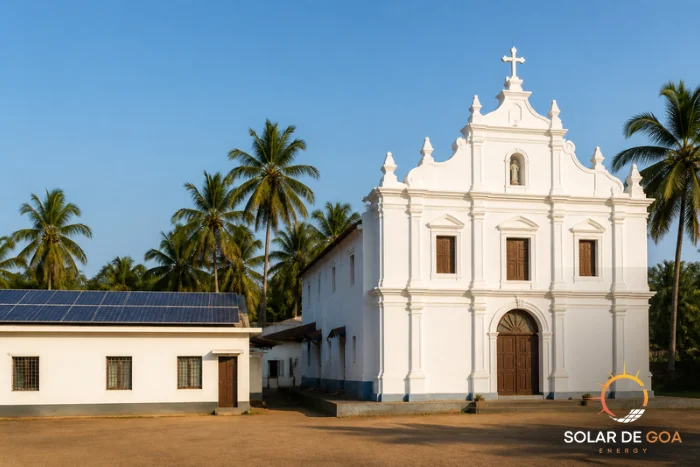
Solar for churches and temples in Goa is a topic many parish councils and temple committees begin discussing as Christmas, feast days and the festival season approach. These are the weeks when lighting, sound systems and fans run hardest, and when committees look closely at the year’s electricity bills.
At Solar De Goa, we speak with committee members who want to understand whether rooftop solar suits a place of worship, and how to plan it without affecting the building’s character. This guide covers how these buildings use power, the roof and permission questions to settle first, and how committees can make a well informed decision.
Part of a church or temple committee? Call Solar De Goa on +91 72229 99652 and share twelve months of electricity bills. We will review your usage before any proposal is discussed.
Direct Answer
Solar for churches and temples in Goa can make sense where the site has a suitable roof or nearby structure and uses a good share of its power during daylight hours, through daytime services, offices, attached buildings and fans. The benefit depends on daily and seasonal usage, your tariff category, metering rules, roof condition and the approvals needed from your governing body. Places of worship should not assume the residential PM Surya Ghar subsidy applies, so we recommend a bill review and site assessment first.
How Places of Worship Use Power
Most churches and temples share a similar pattern of loads:
- Interior lighting, decorative lighting and outdoor floodlights
- Ceiling fans and, in some buildings, air conditioners
- Sound systems, microphones and screens
- Water pumps, offices and residences on the same premises
- Heavy festival lighting during feasts, Christmas, zatras and other celebrations
Daily services may run in the morning and evening, while offices, cleaning and preparation often happen during the day. Festival periods bring short spells of very high use.
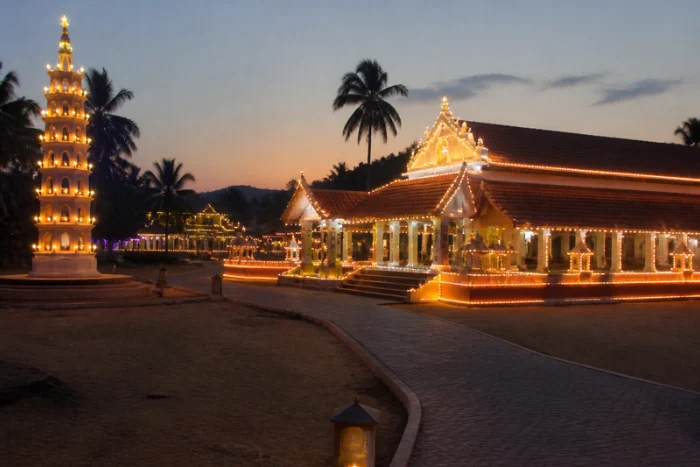
Matching Solar for Churches and Temples in Goa to Your Usage
Solar panels produce power during daylight hours, so the closer your usage sits to the day, the more solar power you can use directly. Evening services and festival illuminations will mostly draw from the grid. A system sized only for festival peaks may produce power on quiet days that is not used on site, so how surplus power is treated under current metering rules matters.
Roof and Building Checks
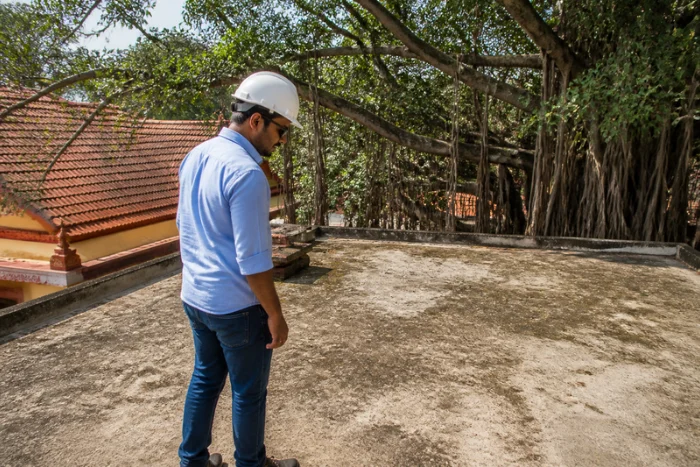
Many places of worship in Goa have sloped tiled roofs, older structures or distinctive architecture. Before any planning, a qualified engineer should assess roof strength, waterproofing, shade from trees and the effect on the building’s appearance. Where the main building is historic, it is often better to use a nearby roof, such as a parish office, school block or annexe, or a structure over a parking area. For older or heritage buildings, we recommend checking structural and permission requirements carefully before proceeding.
Solar De Goa reviews these points during the site assessment so any proposal respects both the building and its usage.
Tariff, Metering and Electrical Work
Tariff categories for places of worship can vary, so we recommend confirming yours with the Goa Electricity Department before estimating savings. Metering arrangements are subject to current Goa Electricity Department and JERC rules. Our guide to residential vs commercial solar benefits in Goa explains why the type of connection affects what applies. Places of worship should check the official PM Surya Ghar portal and current rules rather than assume the residential subsidy applies.
All wiring, earthing and inverter work must be done by qualified electrical professionals, with extra care around areas used by large gatherings.
How Committees Can Decide
We recommend a simple, transparent process:
- Collect twelve months of electricity bills for each connection on the premises
- Agree which roofs or structures may be considered
- Seek approval from your parish council, diocese or temple trust as applicable
- Compare itemised proposals, including structure, approvals and service support
For a general view of how rooftop solar costs are built up, see our solar panel cost guide.
Frequently Asked Questions
Can solar panels be installed on an old church or temple roof?
Sometimes, but older and heritage roofs need careful structural and permission checks. Using another roof or structure on the premises is often a better option.
Will solar cover our festival lighting?
Festival illuminations mostly run in the evening, when panels do not produce power, so they will largely draw from the grid unless storage is included.
Do places of worship get the PM Surya Ghar subsidy?
The scheme is designed for residential homes, so places of worship should not assume eligibility. Check current rules on the official portal.
What should our committee prepare for an assessment?
Twelve months of bills, details of each connection, typical service timings and photos of the roofs being considered.
Final Verdict
Solar for churches and temples in Goa works best where daytime usage is meaningful and a suitable roof or structure is available without affecting the building’s character. Usage patterns, festival peaks, tariff category, metering rules and approvals from your governing body all shape the decision.
We recommend starting with a twelve month bill review. Call Solar De Goa on +91 72229 99652, explore our commercial solar services, or contact our team to book a site assessment.