
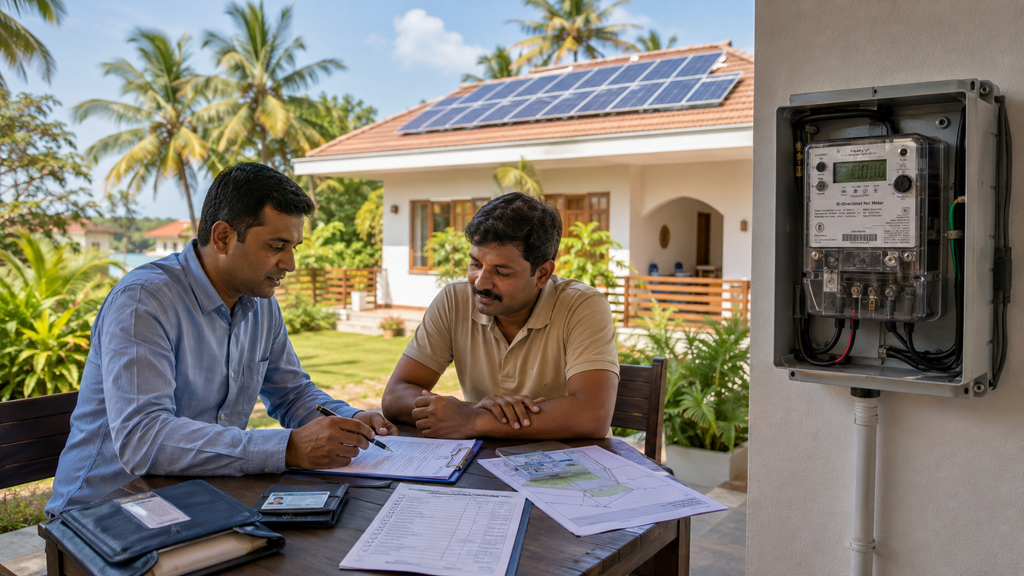
Installing rooftop solar is not only about choosing panels and fixing them on the roof. For a grid-connected system, homeowners also need to understand the application, technical approval, meter-related steps, inspection, and commissioning process.
This can feel confusing when different terms appear at once: consumer number, sanctioned load, feasibility approval, net meter, design documents, joint inspection, and grid connectivity. The process becomes easier when these requirements are discussed before installation rather than after the system is ready.
Solar De Goa helps homeowners review their electricity connection, assess the roof, prepare the system proposal, and understand the application-related steps involved in a grid-connected rooftop solar project.
If you are considering rooftop solar, speak to Solar De Goa before submitting an application so your electricity bill, proposed capacity, roof conditions, and documentation can be reviewed first.
Direct Answer: What Happens During a Net-Metering Application?
A typical grid-connected rooftop solar application involves confirming the consumer’s electricity-connection details, proposing a suitable solar capacity, submitting the required information and documents, completing technical feasibility and design review, installing the approved system, arranging inspection, and completing the meter and commissioning stages.
The exact sequence, charges, documents, and approval conditions can change. Homeowners should therefore confirm the current requirements with the official portal, relevant authorities, and their empanelled installer.
What Is Net Metering?
Net metering is an arrangement used with eligible grid-connected rooftop solar systems. The approved metering setup records electricity flowing between the property and the electricity grid.
During the day, the home may use electricity generated by the solar system. Depending on generation and consumption at that moment, electricity may also flow between the property and the grid. The applicable billing treatment is governed by the prevailing regulations and utility process.
Homeowners should not assume how exported electricity will be valued or adjusted without checking the current rules.
Start with the Electricity Bill
The latest paid electricity bill is one of the most useful documents for beginning the process. It helps confirm important details such as:
- Consumer name
- Consumer or account number
- Connection category
- Service address
- Sanctioned load or contract demand
- Billing and meter information
- Recent electricity consumption
The name, address, and consumer details used in the application should be reviewed carefully. Differences between ownership records, electricity records, and applicant information may need clarification.
Solar De Goa can review the bill before recommending the system and starting the application process.
Documents Homeowners May Need
The exact checklist should be verified when applying. Depending on the application route and current portal requirements, homeowners may need to provide or sign documents connected with:
| Document or detail | Why it may be required |
| Latest paid electricity bill | Confirms consumer and connection information |
| Applicant contact details | Supports communication and application updates |
| Consumer number | Connects the project to the electricity account |
| Signed application | Records the applicant’s formal request |
| Proposed system details | Identifies capacity and equipment |
| Identity or ownership-related information | May support applicant verification |
| Roof or site information | Supports feasibility assessment |
| Payment proof | Confirms applicable processing or metering charges |
| Bank information where relevant | May be requested for applicable benefit processes |
Do not rely on an old online checklist or another homeowner’s application. Ask for the current document list before submission.
The Installer’s Role in the Application
The detailed application is not simply a form-filling exercise. The installer may need to enter technical and site information, propose the system capacity, upload documents, respond to queries, and monitor the application status.
A responsible installer should also make sure the proposed system matches the roof, electricity usage, connection details, and applicable technical requirements.
Before selecting an installer, ask whether application assistance, design submissions, inspection coordination, and commissioning support are included in the quotation.
Solar De Goa can help homeowners coordinate the technical and installation-related parts of the process.
Feasibility and Design Approval
Submitting an application does not automatically mean the project is ready for installation. The proposal may first go through technical feasibility and design review.
The installer may need to prepare documents such as:
- Solar panel array layout
- Shadow-analysis report
- Electrical single-line diagram
- Proposed panel and inverter details
- System-capacity information
- Site and connection details
These documents help show how the rooftop system is intended to be installed and connected.
Homeowners should avoid completing installation based only on verbal approval. Ask the installer what stage the application has reached and whether the required technical approval has been received.
Will the Existing Electricity Meter Change?
A grid-connected rooftop solar project requires an approved metering arrangement capable of recording the relevant electricity flows. Depending on the current setup and applicable process, the existing meter may need to be replaced, reconfigured, or supplemented with the required approved meter.
The homeowner should ask:
- What meter arrangement is required?
- Who supplies or installs the meter?
- Are metering charges applicable?
- At what stage will the meter work take place?
- Will electricity supply be interrupted temporarily?
- Who records and verifies the new meter details?
- When can the solar system be synchronized with the grid?
Do not assume the meter will be changed immediately after the application. Meter-related work is normally connected with approval, installation, inspection, and commissioning stages.
Inspection and Commissioning
After the approved solar system is installed, the installer may need to submit a completion request. The relevant officials can then inspect the project and record the required details.
The inspection may verify whether the system matches the submitted design and applicable grid, interconnection, and safety requirements. Documentation may also need to be signed by the applicant, installer, and authorised official.
Our guide to the solar installation process in Goa explains the broader journey from site assessment and system planning through installation, electrical work, inspection, and commissioning.
Why Applications Get Delayed
An application may require corrections or additional information when:
- Consumer details do not match
- The application is incomplete
- Documents are unclear or missing
- Proposed capacity needs clarification
- Roof or technical information is insufficient
- Design documents are not prepared correctly
- Fees or signed forms are pending
- Queries from the relevant authority are not answered promptly
This is why homeowners should keep copies of every submitted document and ask the installer for status updates.
Questions to Ask Before Applying
Before starting the net-metering process, ask:
- Is my electricity connection information correct?
- Is the proposed capacity suitable for my sanctioned load and usage?
- What documents are currently required?
- Who will submit and track the application?
- What fees or meter charges may apply?
- Has technical feasibility been approved?
- What design documents will be submitted?
- What meter arrangement is required?
- Who will coordinate the final inspection?
- When can the system be commissioned?
Clear answers can prevent confusion later. After you apply, you can read what each stage means in our guide to PM Surya Ghar subsidy status in Goa.
FAQ
Can I install a grid-connected solar system before receiving approval?
The required application, feasibility, and design stages should be understood before installation proceeds. Follow the current official process and installer guidance.
What is the most important document for starting the application?
The latest paid electricity bill is important because it contains the consumer and connection details used for planning and application.
Does net metering always require a new meter?
An approved meter arrangement is required, but the exact meter work depends on the existing setup and current utility process.
How long does approval take?
Timelines can vary according to document completeness, technical review, inspections, meter availability, and current processing conditions. Avoid relying on a guaranteed timeline.
Can Solar De Goa help with the application process?
Solar De Goa can review the bill and site, prepare the system proposal, and help coordinate the technical, installation, and application-related steps.
Final Verdict
A net-metering application in Goa involves more than submitting a basic form. Homeowners should prepare their electricity-connection details, understand the proposed system capacity, confirm the current document checklist, and follow the feasibility, design, inspection, meter, and commissioning stages carefully.
The exact process and charges may change, so every application should be checked against the current official requirements.
Speak to Solar De Goa for a rooftop solar assessment and application-readiness review before installing a grid-connected solar system.