
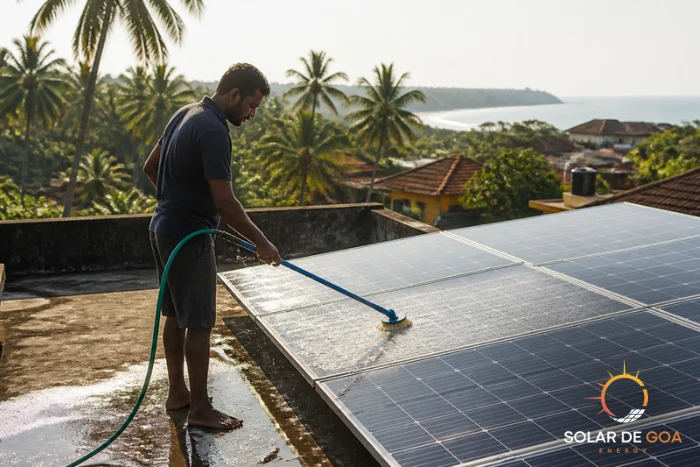
Solar panel cleaning in Goa becomes a real question every year once the monsoon ends and the dry months begin. Dust settles on rooftops, salty sea air leaves a thin film near the coast, and birds treat panels as a perch, so even a well installed system can produce less than it should.
At Solar De Goa, we often hear from owners who notice lower readings after the rains and are unsure what to do. This guide explains what builds up on panels in Goa, how to clean them safely and when a professional check makes more sense.
Seeing lower generation than usual? Call Solar De Goa on +91 72229 99652 to book an inspection or performance check, so you know whether dirt or a fault is the cause.
Direct Answer
Solar panel cleaning in Goa usually means removing dust, salt film, pollen and bird droppings with clean, soft water and a soft brush or cloth, ideally early in the morning or late in the evening when the panels are cool. How often you need to clean depends on your distance from the sea, nearby roads or construction, bird activity and your roof angle. Never stand on panels, and call a professional if generation stays low after cleaning.
Why Solar Panel Cleaning in Goa Needs a Coastal Approach
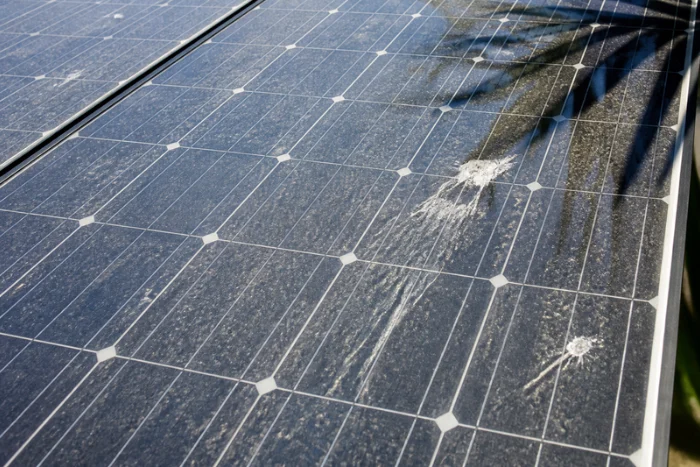
Goa’s climate creates a pattern that inland areas do not see in the same way. Homes near the coast collect a fine salt layer from sea air. The dry months between November and May bring dust from roads, fields and building work. Pollen from coconut palms and other trees can add a sticky film, and bird droppings form concentrated spots that block light on part of a panel.
Monsoon rain washes off loose dust but rarely removes salt residue or dried droppings, so the first dry months are a good time for a close check.
Signs Your Panels Need Cleaning
You do not need to clean on a fixed calendar. Instead, watch for:
- A visible layer of dust, salt or pollen when you look at the panels from a safe spot
- Bird droppings or leaves sitting on the glass
- Generation readings lower than on similar sunny days in the past
- Nearby construction, road work or open fields that create extra dust
A steady drop can also signal shading or a fault that needs inspection rather than cleaning.
A Safe Way to Clean Solar Panels
Only clean panels you can reach safely from a flat terrace without leaning over edges or climbing onto the structure. We recommend:
- Checking your panel manufacturer’s cleaning guidance and following your installer’s advice before you start
- Cleaning early in the morning or late in the evening, when the glass is cool
- Rinsing first with clean, soft water to loosen dust and salt
- Using a soft brush or sponge with a long handle for stubborn spots
- Rinsing again so no residue dries on the glass
Hard or brackish water can leave spots of its own, so cleaner water gives a better finish.
What to Avoid
- Standing, sitting or kneeling on the panels
- Pressure washers, abrasive pads or harsh detergents that can damage the glass or coating
- Spraying cold water onto very hot panels in the middle of the day
- Touching cables, connectors, junction boxes or the inverter
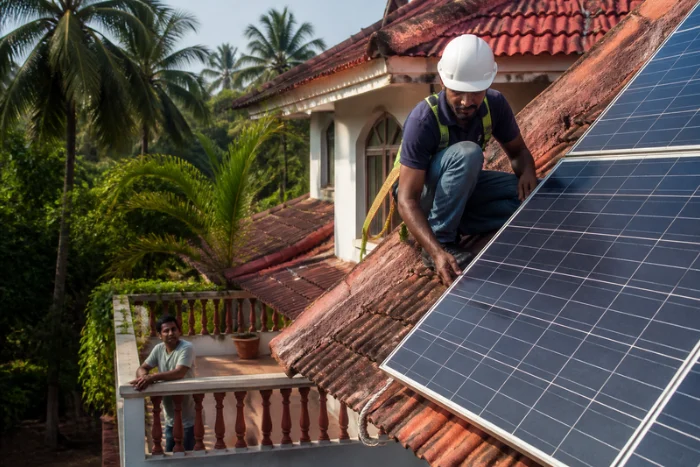
- Working on sloped, tiled or high roofs without proper safety equipment
How Often Should You Clean?
Your own generation readings are the best guide to when cleaning makes a difference.
When to Call a Professional
Some situations are better left to a trained team. These include panels on sloped or tiled roofs, systems that cannot be reached safely, cracked glass or loose fittings, and generation that stays low even after cleaning. Solar De Goa can inspect your system, check for shading, wiring or inverter issues, and explain what is affecting performance. Our post monsoon solar roof inspection guide covers the wider checks worth doing at this time of year, and our guide to annual solar maintenance cost in Goa explains how to budget for upkeep.
Frequently Asked Questions
Does rain clean solar panels in Goa?
Rain removes loose dust, but salt residue, pollen and dried bird droppings often remain, so a check after the monsoon is still worthwhile.
Can I use soap to clean my solar panels?
Follow your panel manufacturer’s guidance. Harsh detergents can leave residue or affect the coating, so clean water and a soft brush are the safer starting point.
Is it safe to clean panels myself?
Only if you can reach them safely from a flat terrace without stepping on them or near roof edges. Otherwise, it is better to call a professional.
Why is my generation still low after cleaning?
Shading, a loose connection, an inverter issue or panel damage can also reduce output. A qualified technician should inspect the system.
Final Verdict
Solar panel cleaning in Goa matters most in the dry months, especially for homes near the sea, roads or trees. Gentle, safe cleaning can help panels perform as they should, while low readings that do not improve call for a proper inspection.
We recommend checking your generation readings after the monsoon and acting on what they show. Call Solar De Goa on +91 72229 99652 or contact our team to book an inspection or performance check.