
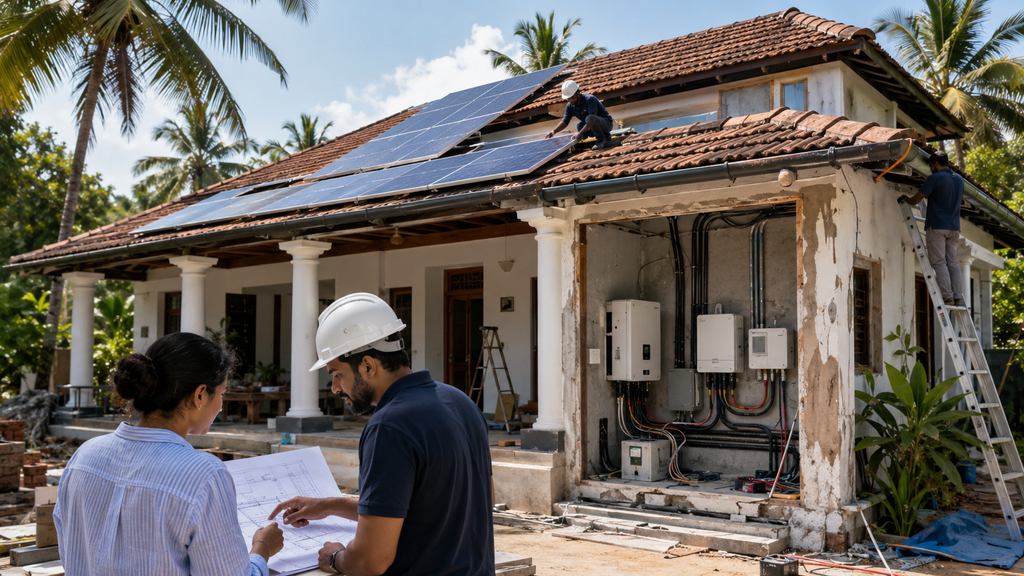
A home renovation is one of the best times to prepare for rooftop solar. Walls may already be open, electrical wiring may be under review, the roof may need repairs, and utility areas may still be flexible. Planning solar at this stage can help avoid visible cables, repeated drilling, damaged finishes, and last-minute changes after the renovation is complete.
However, solar planning should not be left entirely to the electrician, contractor, architect, or interior designer. The solar installer should inspect the property and coordinate the roof layout, cable route, inverter location, electrical panel, and future energy requirements before key finishes are finalized.
Solar De Goa helps homeowners assess existing properties during renovation and plan rooftop solar around the actual roof, electrical system, household usage, and proposed changes.
If you are renovating a home in Goa, schedule a Solar De Goa site assessment before completing roof repairs, concealed wiring, ceilings, exterior finishes, or utility spaces.
Direct Answer: When Should Solar Be Planned During Renovation?
Solar should ideally be discussed before roof work, waterproofing, electrical rewiring, wall finishing, false ceilings, exterior painting, and fixed cabinetry are completed.
The panels do not necessarily need to be installed immediately. But the likely panel area, inverter position, cable path, electrical connection, earthing requirements, and future access should be considered while the renovation is still flexible.
Early coordination can make the later installation cleaner and more practical.
Start with the Renovated Home’s Future Electricity Needs
Do not size solar only from electricity bills generated before renovation. The household’s power usage may change after the work is complete.
The renovated home may include:
- Additional air conditioners
- A larger kitchen
- New water pumps
- Home-office equipment
- More lighting
- Security cameras
- Gate motors
- Outdoor and garden lighting
- A swimming pool
- An electric vehicle charger
- Additional bedrooms or rental areas
Tell the solar installer about these plans. The proposed system should consider current consumption, likely future usage, roof space, and the electrical changes being made during renovation.
Complete a Roof Assessment Before Final Roof Work
Renovation may involve repairing the slab, replacing tiles, adding a waterproofing layer, moving water tanks, constructing a staircase cabin, or changing the terrace layout.
These decisions can affect the solar panel arrangement.
Before completing the roof, check:
- Which areas receive usable sunlight
- Where water tanks and pipes will remain
- Whether new walls will create shade
- How workers will access the panels
- Where maintenance walkways will be left
- Whether the roof structure needs professional assessment
- How mounting work will coordinate with waterproofing
- Whether future construction is planned
Solar panels should not block drainage, water-tank access, plumbing repairs, or routine roof maintenance.
Solar De Goa can review these conditions before the roof layout becomes fixed.
Coordinate Solar with Waterproofing
If the roof requires waterproofing, coordinate the solar structure plan before final work is completed. The waterproofing contractor and solar installer should understand where panels may be installed and how the roof must remain accessible.
Do not drill or alter the roof based on assumptions about the future solar layout. The mounting approach can depend on roof type, structure, system design, and site conditions.
Planning both scopes early helps reduce the risk of completed waterproofing being disturbed unnecessarily later.
Plan a Concealed and Serviceable Cable Route
A renovation gives homeowners an opportunity to plan a cleaner solar cable route. Suitable conduits or pathways may be considered before walls, shafts, and ceilings are closed.
The route normally needs to connect the rooftop panel area with the planned inverter and electrical connection area. It should be practical, protected, and accessible for future inspection.
Questions to resolve include:
- Where will cables enter the building?
- Can an existing service shaft be used?
- Are separate pathways required?
- Will the route pass above a false ceiling?
- Can cables be inspected or replaced later?
- Will future drilling or cabinetry interfere with the route?
- How will external sections be protected?
Avoid concealing equipment or connections in places that cannot be reached after the interiors are finished.
Choose the Inverter Location Before Fixing Interiors
The inverter should not be placed wherever empty wall space remains after renovation. It needs a suitable location that considers ventilation, weather protection, electrical connection, cable distance, service access, and daily household movement.
Depending on the property, a utility space, covered service area, garage, electrical room, or suitable protected wall may be considered.
Do not place permanent wardrobes, decorative panels, or storage units across the proposed service area. Keep enough access around the equipment for inspection and maintenance.
Solar De Goa can recommend an inverter location during the renovation-stage site visit.
Review the Existing Electrical Panel
An older home may be receiving new wiring, additional circuits, a revised distribution board, or higher household loads during renovation. This is the right time to coordinate the solar connection with the electrical plan.
The solar installer and qualified electrical professionals should understand:
- The condition of the existing electrical panel
- Planned rewiring or panel replacement
- Connection and meter details
- Earthing arrangements
- Protection requirements
- Current and future loads
- The proposed inverter location
- The route between solar equipment and the electrical system
Homeowners should not attempt electrical modifications themselves. These checks and works must be handled by appropriate professionals.
Keep Solar, Contractor, and Interior Teams Coordinated
Renovation projects often involve separate teams. The civil contractor may change the roof, the electrician may install conduits, the plumber may move tanks, and the interior designer may cover walls where equipment was expected.
A short coordination discussion can prevent these conflicts.
| Team | Solar-Related Detail to Coordinate |
| Civil contractor | Roof changes, mounting zones and access |
| Waterproofing team | Roof treatment and future mounting work |
| Electrician | Cable pathways, panel and earthing plans |
| Plumber | Water tanks, pipes and drainage routes |
| Interior designer | Inverter wall and service clearances |
| Solar installer | Layout, equipment positions and system requirements |
The solar installer should review the final site rather than relying only on architectural drawings.
Should Solar Be Installed Before Renovation Ends?
Not always. The right installation stage depends on roof completion, dust-producing work, access, electrical readiness, security, and the project schedule.
Installing panels too early may expose them to construction activity or make other roof work difficult. Installing too late may require reopening finished surfaces or adding visible cable routes.
The best approach is to plan early and schedule the physical installation when the roof and electrical infrastructure are ready.
Common Mistakes to Avoid
Do not wait until interiors are finished before deciding the cable route and inverter location. Do not complete roof alterations without checking how much usable solar area will remain.
Avoid placing tanks, walls, or service equipment without considering shade and panel access. Do not assume the renovation electrician has automatically included all solar requirements.
Also, do not purchase a system before the renovated home’s future electricity needs and roof conditions have been assessed.
FAQ
Should I install solar before or after renovating my Goa home?
Plan solar during the renovation and schedule installation when the roof, wiring provisions, and electrical system are ready.
Can solar conduits be concealed during renovation?
Suitable pathways may be planned before finishes are completed, but their design and use should be confirmed by the solar installer and electrical professionals.
Should waterproofing be completed before solar installation?
Roof treatment and solar mounting should be coordinated. The correct sequence depends on the roof and proposed installation method.
Do I need to upgrade my electrical panel during renovation?
Not every property does. The existing panel and planned household loads should be professionally assessed before deciding.
Can Solar De Goa coordinate with my renovation team?
Solar De Goa can inspect the site, explain solar-related provisions, and help coordinate roof, wiring, inverter, and electrical planning before installation.
Final Verdict
Planning solar during home renovation can produce a cleaner and more serviceable installation. The key is to make decisions about roof use, waterproofing, cable pathways, inverter placement, electrical readiness, and future household loads before the building finishes become difficult to change.
The system does not necessarily need to be installed at the start of renovation. But the required provisions should be identified early and coordinated with the relevant teams.
Schedule a renovation-stage solar assessment with Solar De Goa before completing your roof, wiring, ceilings, and interiors.