
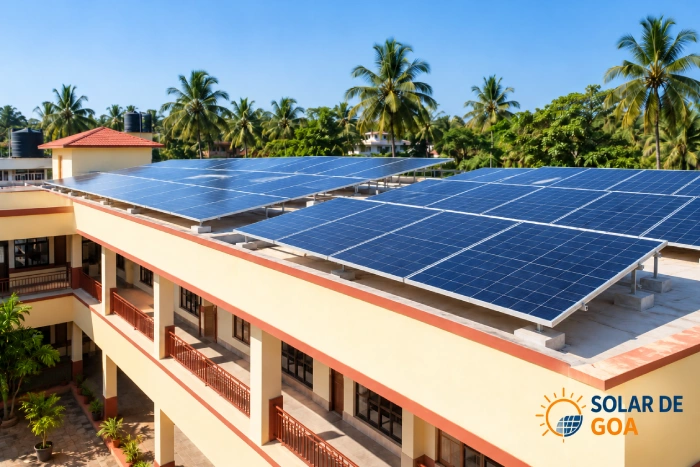
School and college management committees in Goa often look at solar for one practical reason: a large part of the electricity bill is used during the day, when classrooms, computer labs, fans, lights and offices are running. That daytime pattern is what solar generation matches best. But institutions also have things homes and shops do not, such as holiday periods, student safety, shared decision making and approvals that take time. At Solar De Goa, we help schools and institutes in Goa look at these questions early, so that the decision is clear before any quote is requested.
Planning for your institute? Contact Solar De Goa to request a site assessment.
Direct Answer
Solar can suit a school or educational institute in Goa when most of its power is used during the day, the roof can safely host panels, and the management is comfortable with a long-term investment. We do not state savings percentages or payback periods here, because they depend on tariff, load, roof and system design. A review of your recent bills, timetable and roof is the right starting point.
Why Schools Often Match Solar Well
Most schools and colleges run lessons, labs, offices and lighting while the sun is up. That means a good share of solar output may be used on site as it is produced. Our guide to daytime power usage and solar ROI in Goa explains why matching your usage hours to generation matters. Evening activities such as hostels, hall events and coaching classes are worth listing as well, since they change the picture.
Mapping an Institute’s Loads
A simple list like this helps an installer see how much of your usage falls in daylight.
Holidays and Vacations
Schools have long breaks when buildings sit nearly empty, and usage drops. During those periods, a rooftop system may generate more than the building uses. How that extra power is treated depends on net metering rules, which are subject to current policy and should be confirmed with the Goa Electricity Department. Because Goa’s monsoon overlaps with a large part of the school year, it is also sensible to look at a full year of bills instead of one or two months.
Roof, Structure and Safety Around Students
Safety comes first on a campus. Installation work should be planned around class timings, play areas and access routes, with clear barriers and supervision so that students stay away from work zones. Roof strength, shade from trees and buildings, and access for cleaning should be checked on site. Electrical work, earthing and connections must always be done by qualified professionals. We recommend agreeing timing and safety arrangements with the school management before work starts.
Questions Management Should Settle First
- Who owns the building and the roof, and is permission needed from a trust or society?
- What is the sanctioned load and tariff category of the connection?
- Which approvals and metering arrangements apply to an institution?
- Who within the management will make the final decision?
- How will the work be scheduled around academic activity?
Funding, Grants and Approvals
Do not assume that grants or special institutional subsidies exist for solar. If you believe your institute may qualify for a scheme, verify it with the relevant authority, such as GEDA or MNRE, before including it in any budget. Approvals and metering rules are subject to current requirements. Our guide to residential vs commercial solar benefits in Goa explains why subsidy assumptions should be checked before planning.
How Solar De Goa Helps
We begin with your bills, your timetable and a visit to the roof. We then explain what may make sense, what to confirm with the authorities and how installation can be planned with student safety in mind. You can read more on our commercial solar services page. We are happy to explain the options to your management committee in plain language.
FAQ
Is solar worth it for a school in Goa?
It can be, especially when most usage happens in daylight. A review of your bills, timetable and roof will show how well it fits.
What happens to solar output during school holidays?
Output may exceed use on site during breaks. How the surplus is handled depends on net metering rules, subject to current policy.
Can installation be done while students are on campus?
It can be, with careful scheduling, barriers and supervision. Your installer should agree a safety plan with the management before work begins.
Are there government subsidies for solar in schools?
Do not assume so. Check with the relevant authority, such as GEDA or MNRE, before relying on any scheme.
What should we share for a site assessment?
Recent electricity bills, your timetable, your sanctioned load details and photos of the roof are a good start.
Final Verdict
For schools and institutes, solar works best when daytime usage is high, safety planning is clear and approvals are checked first. Review a full year of bills, then decide with your management committee.
Ready to explore options for your institute? Contact Solar De Goa and request a site assessment.